
Pipe Burst in a Santa Monica Condo or Apartment? What to Do First
A burst pipe in a single-family house is stressful. In a condo or apartment building, it is more complicated, because the water rarely stays in one unit. It runs through ceilings, under shared walls and into the unit below. Many Santa Monica homes are in multi-unit buildings, so this guide walks through the first steps in the order that matters most, and explains who usually handles what between owners, tenants, HOAs and landlords.
What should you do first when a pipe bursts?
Stop the water and make the area safe. Everything else can wait a little.
- Shut off the water. Most units have a fixture valve under sinks and behind toilets. If the leak is in a wall or ceiling, look for a unit shutoff, often near the water heater or in a utility closet. If you cannot find one, call building management or the HOA’s emergency contact right away to shut the building or riser valve.
- Turn off electricity to wet areas if you can do it safely from a dry spot. Never walk through standing water near outlets, power strips or appliances.
- Move valuables, electronics and papers out of the wet area. Put foil or plastic under furniture legs to keep wood from wicking up water.
- Knock on doors. Check on the unit below and units next to yours. Your neighbors may not know water is coming through their ceiling yet.
Who is responsible for water damage in a condo or apartment?
It depends on where the pipe was, what your governing documents say and what each insurance policy covers. As a general pattern:
- Condo owners usually carry their own policy (often called an HO-6) for the interior of the unit and personal property. The HOA’s master policy usually covers common elements and the building structure. Your CC&Rs spell out where the line falls.
- Tenants are usually covered for their own belongings by renters insurance. The building structure is normally the landlord’s responsibility and the landlord’s policy.
- Landlords generally need to be notified promptly so they can arrange repairs and contact their insurer.
Do not assume who pays before the adjusters weigh in. Report the loss to your own insurer and to building management, and let the policies sort out the split.
How should you document the damage for insurance?
Good documentation is the single most useful thing you can do for your claim.
- Take wide photos of each room, then close-ups of stains, wet flooring, swollen baseboards and damaged items.
- Photograph the source of the leak if it is visible, plus the shutoff valve you used.
- Take video while walking slowly through the unit, narrating what you see.
- Keep damaged items until the adjuster says you can discard them, or photograph them clearly first.
- Write down the date, when you discovered the leak and who you notified.
Save receipts for anything you buy to protect the property, such as tarps or fans. Reasonable steps to prevent further damage are part of most policies’ expectations.
Why does hidden moisture matter so much in multi-unit buildings?
Water travels. In stacked buildings it moves along framing, through subfloors and inside walls you share with neighbors. A floor can feel dry on top while the pad, subfloor or drywall bottom stays wet. Trapped moisture is what leads to warped flooring, odors and mold.
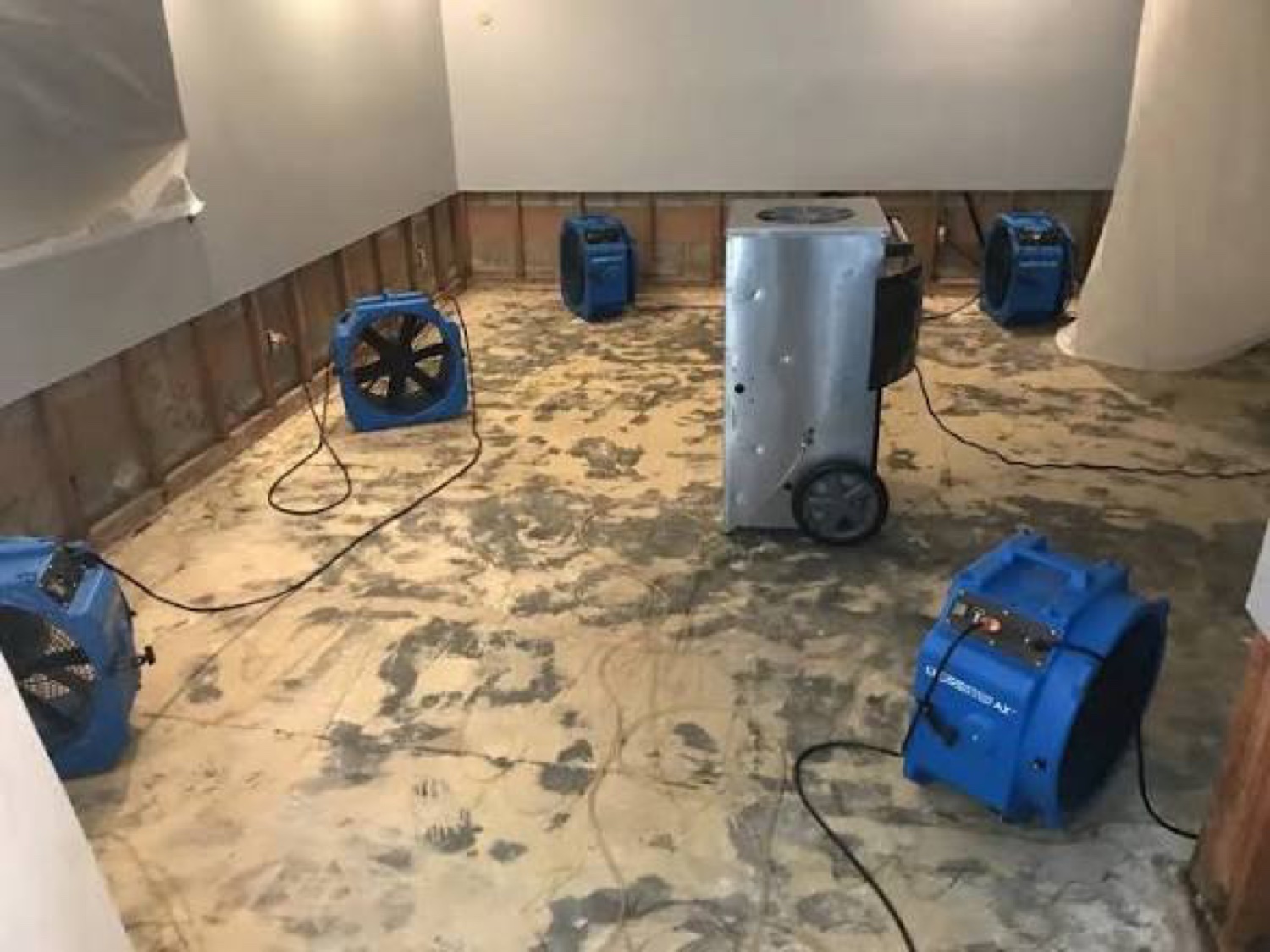
That is why professional drying starts with moisture mapping: using moisture meters and thermal imaging to find where the water actually went, including the unit below. A drying plan then uses air movers and dehumidifiers sized to the space, and readings are taken until materials reach dry standard. Learn more about the process on our water damage restoration page.
Should you start cleanup yourself?
Small, clean-water spills on hard floors can often be mopped and dried. But for a burst supply line or a leak inside a wall, it is usually better to stop after the safety steps and documentation. Pulling up flooring or cutting drywall before an adjuster or restoration professional has seen it can make the claim harder. Avoid using a household vacuum on wet carpet, and do not run a space heater to “dry things out,” since heat without dehumidification can push moisture deeper into materials.
What does a restoration company do on a condo or apartment loss?
- Inspect your unit and, with permission, adjacent and lower units.
- Extract standing water and set up drying equipment.
- Remove materials that cannot be dried, such as saturated pad or swollen baseboards.
- Document moisture readings daily, which supports your insurance claim.
- Coordinate with building management, the HOA and multiple insurance carriers.
77 Rapid Restore is licensed, bonded and insured, IICRC-certified and Cal/OSHA bloodborne pathogens certified. Fast response, and we bill your insurance company directly. We work throughout Santa Monica and the Westside, including condos and apartment buildings.
Burst pipe FAQ
Can my landlord or HOA choose the restoration company?
For the building structure they often coordinate repairs. For your own unit’s contents and interior, you can usually choose. Check your lease or CC&Rs and ask your insurer.
Do I need to leave my unit during drying?
Not always. Many people stay while equipment runs. It depends on the extent of damage, noise tolerance and whether contaminated water was involved.
Is water from a burst pipe considered clean?
A supply line usually starts as clean water, but it can pick up contaminants as it passes through building materials. Water from a toilet overflow or drain line is treated differently.
Will my insurance cover a burst pipe?
Sudden and accidental pipe bursts are commonly covered, while slow, long-term leaks often are not. Your specific policy decides, so report the loss and ask your adjuster.
Dealing with a burst pipe in Santa Monica? Call 77 Rapid Restore at (747) 281-3872.